

• anujshah.onco@gmail.com
  • Hope Surgical Cancer Care, Avni Complex, HR Elanza, Vikas Gruh Rd, Paldi, Ahmedabad, Gujarat 380007

HPB Surgery

HPB Surgery

Is HPB surgery considered major surgery? 

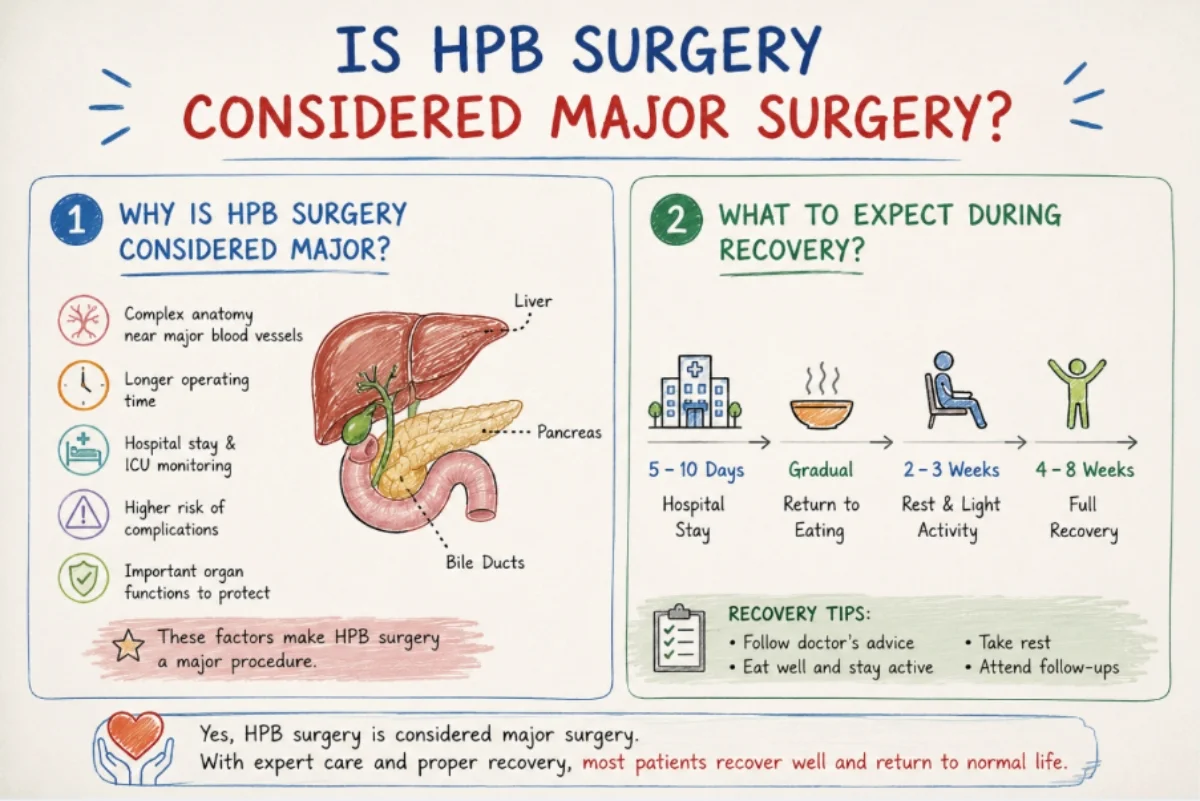
Is HPB surgery considered major surgery? If your doctor has mentioned HPB surgery, you’ve probably already sensed this isn’t a routine procedure. Maybe you’ve searched late at night, trying to understand what you’re facing. So let’s answer the question plainly: is HPB surgery considered major surgery? Yes, it generally is, and understanding why can help you feel more prepared instead of more afraid.  What Exactly Is HPB Surgery? HPB stands for hepato-pancreato-biliary, which simply means the liver, pancreas, and bile duct system. These organs sit close together, work closely together, and share some of the body’s most important blood vessels. HPB surgery covers procedures on any of them, from removing part of the liver to operating on the pancreas or repairing the bile ducts.  Is HPB Surgery Considered Major Surgery? Here’s Why the Answer Is Yes  A few things push HPB procedures into the “major surgery” category:  Complex anatomy. The liver, pancreas, and bile ducts are surrounded by major blood vessels, which demand precision and experience.  Longer operating times. Many HPB procedures take several hours under general anesthesia.  Hospital recovery. Patients typically stay in the hospital for days, sometimes with a short stint in intensive care for monitoring.  Organ function matters. The liver and pancreas do essential jobs, from filtering blood to managing digestion and blood sugar, so surgeons must protect what remains as carefully as they remove what’s diseased.  Higher risk of complications. Bleeding, bile leaks, or pancreatic fluid leaks are possibilities that need close monitoring afterward.  None of this is meant to alarm you. It’s meant to explain why this type of surgery is handled by specially trained HPB surgeons, not general surgeons taking on an occasional complex case. Common Types of HPB Procedures Liver resection (hepatectomy): removing part of the liver, often for tumors  Whipple procedure (pancreaticoduodenectomy): removing the head of the pancreas along with nearby structures  Distal pancreatectomy: removing the tail or body of the pancreas  Bile duct surgery: repairing or removing damaged or blocked portions of the bile duct  gallbladder surgery: needed when the gallbladder or nearby bile ducts are affected by cancer or severe disease  Does “Major Surgery” Mean Higher Risk Today? It’s fair to worry about risk, but surgical care has changed a great deal. Many HPB procedures are now performed using laparoscopic or robotic techniques, which use smaller incisions, cause less pain, and often shorten recovery time. The surgery is still major in scope and complexity, but the experience for patients has genuinely improved. Choosing a Surgical Oncologist with dedicated HPB experience makes a real difference in outcomes.  What Should Patients Expect During Recovery? Recovery timelines vary depending on the exact procedure, but here’s a general idea:  Hospital stays often range from five to ten days, depending on the surgery  Gradual return to eating, starting with liquids before solid food  Fatigue and reduced appetite are common in the first few weeks  Full recovery and return to normal activity can take four to eight weeks  Follow-up appointments help monitor healing and organ function  Practical Tips Before HPB Surgery Ask your surgeon exactly which organs and structures are involved  Discuss any existing health conditions, since they affect anesthesia and recovery planning  Arrange support at home for the first couple of weeks after discharge  Write down your questions beforehand, even simple ones, so nothing gets lost in the moment  Focus on eating well and staying active where possible before surgery, since this can support recovery afterward  A Reassuring Perspective So, is HPB surgery considered major surgery? Yes, and there’s no reason to soften that truth. But major surgery doesn’t mean unmanageable, and it doesn’t mean you’re facing it without support. With an experienced HPB team, careful planning, and realistic expectations, patients recover and return to their lives every day. Complexity is simply a sign that this surgery deserves careful hands, not a reason to lose hope.  If you or a loved one has been told you need HPB surgery and want a clear, honest conversation about what to expect, Dr. Anuj Suketu Shah is glad to walk you through your options and help you feel confident about the path ahead.
HPB Surgery

Does Sugar Feed Cancer Cells?

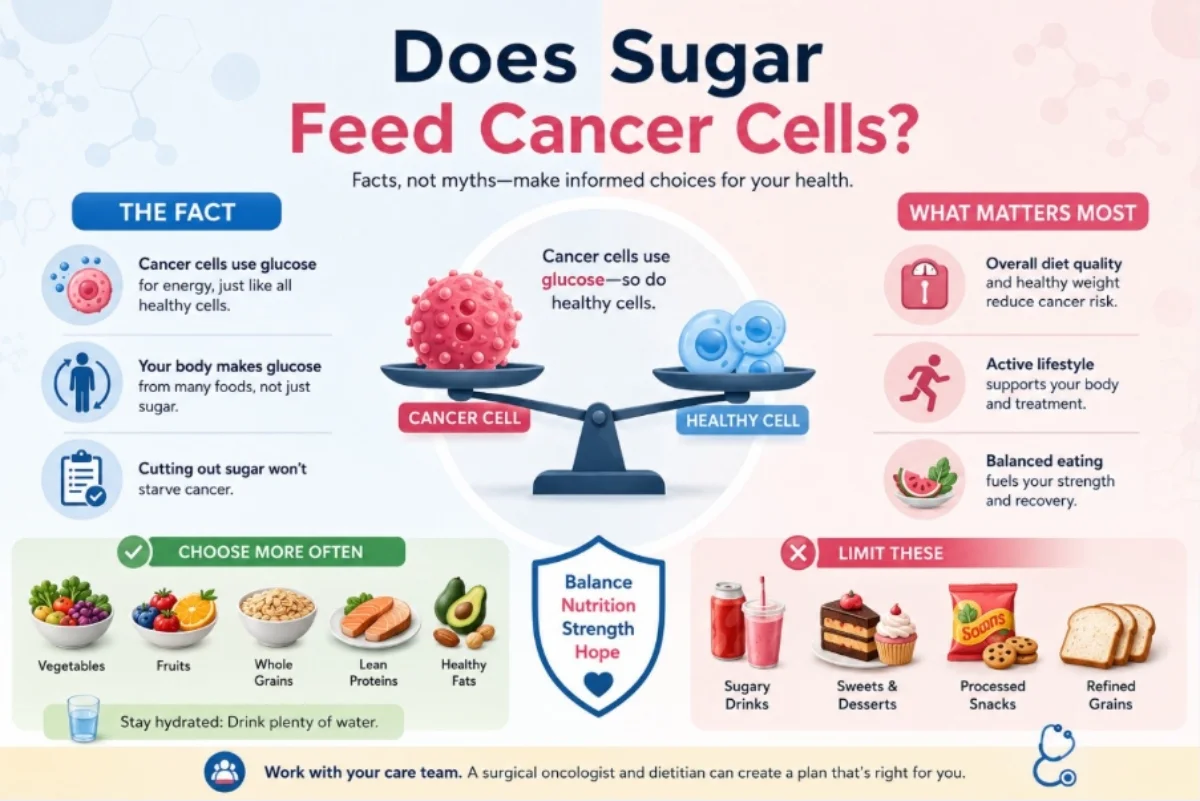
Does Sugar Feed Cancer Cells? If you’ve ever heard someone say, “Stop eating sugar because it feeds cancer,” you’re not alone. This idea has been shared for years, leaving many people confused about what they should and shouldn’t eat.  So, is it true?  The short answer is no, not in the way many people believe. While cancer cells do use sugar for energy, so do all the healthy cells in your body. Cutting out sugar completely won’t starve cancer, but making healthier food choices can support your overall well-being during and after cancer treatment.  Why Do Cancer Cells Use Sugar? Every cell in your body needs energy to survive. That energy mainly comes from glucose, a simple type of sugar that your body gets from carbohydrates like fruits, vegetables, grains, milk, and even sweets.  Cancer cells tend to grow and multiply much faster than normal cells. Because of this, they often use more glucose than healthy cells. This is one reason doctors can sometimes detect cancer using special imaging scans that track how much glucose different parts of the body are using.  However, this does not mean that eating sugar directly causes cancer to grow faster.  If you stop eating sugar, your body simply makes glucose from other foods, including proteins and fats, because your brain and other organs still need it to function. In other words, cancer cells will continue to receive glucose even if you avoid sugary foods. Does Eating Sugar Cause Cancer? Current research does not show that sugar itself causes cancer.  What can increase the risk of several types of cancer is regularly eating too many high-calorie, sugary foods, which may contribute to weight gain and obesity. Being overweight has been linked to a higher risk of cancers such as breast, colon, kidney, and pancreatic cancer.  The real concern isn’t sugar alone, it’s the overall quality of your diet and lifestyle.  Enjoying an occasional dessert isn’t likely to increase your cancer risk. Problems usually develop when sugary drinks, sweets, and highly processed foods become a regular part of everyday eating.  Should People With Cancer Avoid Sugar Completely? In most cases, the answer is no.  People going through cancer treatment often need enough calories and nutrients to maintain their strength. Eliminating sugar is usually unnecessary and can sometimes make it harder to eat enough, especially if treatment affects appetite or causes weight loss.  Instead of focusing on removing every gram of sugar, it’s more helpful to aim for a balanced diet that includes:  Plenty of vegetables and fruits  Whole grains  Lean proteins such as fish, eggs, beans, and chicken  Healthy fats from nuts, seeds, and olive oil  Plenty of water  A Surgical Oncologist, medical oncologist, or registered dietitian can help create a nutrition plan that fits a person’s treatment and recovery needs. What Diet Helps Lower Cancer Risk? No single food can prevent cancer, but healthy eating habits can lower your overall risk and support your body during treatment and recovery.  Some practical habits include:  Fill half your plate with colorful vegetables.  Choose whole grains instead of refined grains whenever possible.  Limit sugary drinks and highly processed snacks.  Eat enough protein to help maintain muscle and strength.  Stay physically active if your doctor says it’s safe.  Maintain a healthy body weight over time.  These habits support overall health and may reduce the risk of several chronic diseases, including some cancers.  So What Should You Actually Do? You don’t need to swear off sugar forever or feel guilty about the occasional dessert. What genuinely helps is a balanced, sustainable approach:  Focus on whole foods like vegetables, fruits, lean proteins, and whole grains most of the time.  Limit sugary drinks and heavily processed snacks, since these add empty calories without much nutrition.  Maintain a healthy weight through regular movement and balanced eating.  Talk to your care team about your specific diagnosis and nutrition needs, since every cancer type and every person’s body is different.  Separating Fact From Fear Sugar doesn’t have a secret power to specifically feed or grow cancer cells the way that popular myths suggest. Cancer cells use more glucose than normal cells, but so does the rest of your body, and cutting out sugar entirely won’t starve a tumor. What matters more is your overall diet pattern, weight, and metabolic health over time.  Instead of chasing extreme rules or cutting out entire food groups out of fear, focus on balance and lean on trusted professionals to guide decisions that are right for you. As Dr. Anuj Suketu Shah, a surgical oncologist, often reminds patients, nutrition during cancer care isn’t about following viral rules; it’s about working with your care team, including your surgical oncologist and dietitian, to build a plan that actually fits your body and your treatment.    

Scroll to Top

Contact Us