
Chest pain when eating - Could it be esophageal cancer?
Have you ever felt a strange tightness or burning in your chest while eating? Maybe it happened once after a spicy meal, or maybe it keeps coming back. It is easy to get worried and start thinking the worst. But take a breath chest pain when eating is very common, and in most cases, it has a simple, treatable explanation.
In this article, we will explain why this happens, what the common causes are, when to be concerned, and what esophageal cancer actually looks like – so you can make smart decisions about your health without unnecessary panic.
What Is the Esophagus and Why Does It Cause Chest Pain?
The esophagus is the food pipe – a long tube that carries food and liquids from your throat down to your stomach. It runs right through the middle of your chest. So when anything irritates, inflames, or blocks this tube, you feel the pain exactly in your chest area.
This is why many digestive problems feel like they could be heart-related. The two organs are physically very close to each other. But if the pain happens mainly during or after eating, the esophagus is usually the more likely source.
Common Causes of Chest Pain When Eating
Before thinking about anything serious, it helps to know the most likely everyday reasons:
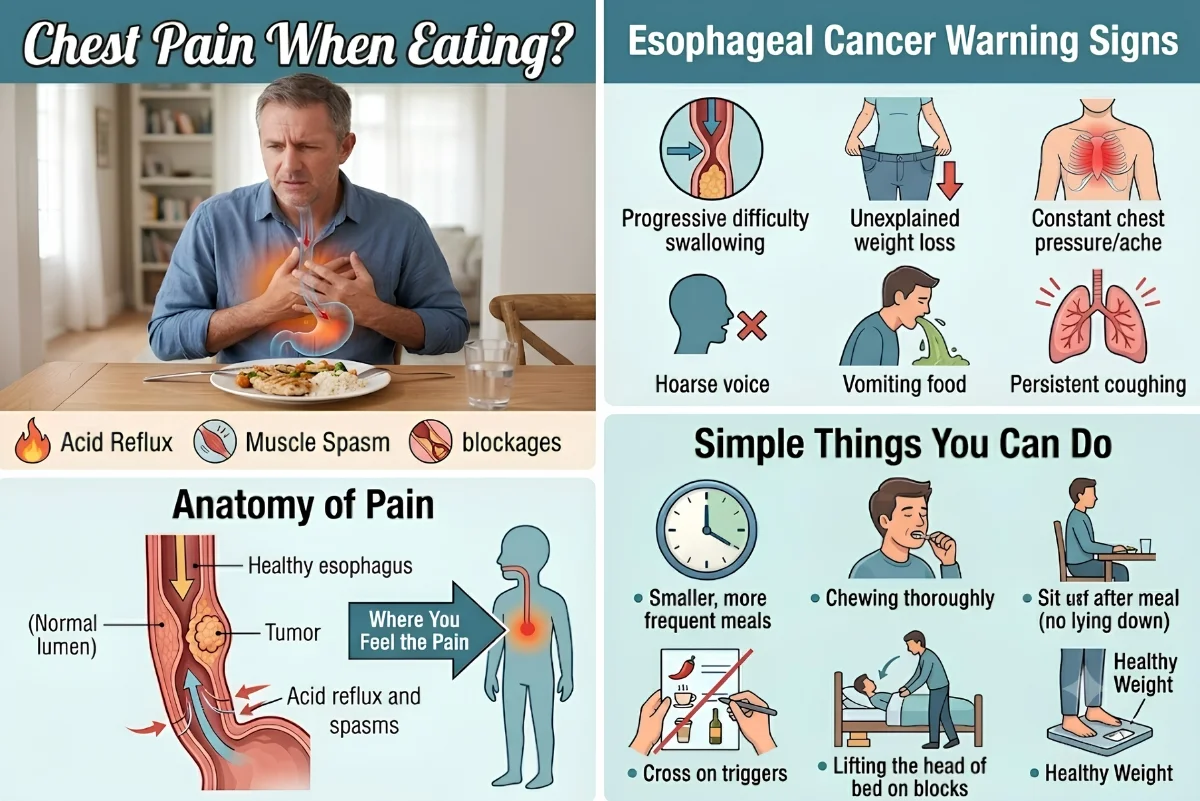
- Acid Reflux (GERD) — The most common cause. When stomach acid flows back up into the food pipe, it creates a burning feeling in the chest. This is often called heartburn. It gets worse with spicy, oily, or heavy meals.
- Esophageal Spasm — The muscles of the food pipe sometimes contract suddenly and strongly. This causes a tight, cramping chest pain during or after swallowing, which can feel alarming but is usually harmless.
- Eating Too Quickly — When you swallow food in large pieces without chewing properly, it can get temporarily stuck in the esophagus. This creates pressure and discomfort in the chest.
- Hiatal Hernia — This happens when a small part of the stomach pushes up through the diaphragm (the muscle below your lungs). It causes chest pain and heartburn, especially after eating a large meal.
- Esophagitis — This means the lining of the food pipe is inflamed. It can happen due to long-term acid reflux, certain medications, infections, or food allergies. Swallowing becomes uncomfortable or painful.
- Anxiety and Stress — Strong emotions can cause the muscles in your chest and throat to tighten. This is why some people feel chest discomfort when eating in stressful situations.
When Should You Be Concerned?
Esophageal cancer develops in the lining of the esophagus. It’s not a common cancer — it accounts for about 1% of all cancers diagnosed each year — but it is serious, and early detection makes a significant difference in outcomes.
The key thing to understand is this: esophageal cancer rarely causes chest pain on its own in the early stages. By the time it starts causing noticeable symptoms, it’s often been growing for a while.
Here are the specific warning signs that are associated with esophageal cancer:
- Difficulty Swallowing That Gets Progressively Worse : This is the most common early symptom. It usually starts with solid foods – bread, meat, or dense foods that feel like they’re not going down easily. Over time, even softer foods or liquids can become difficult to swallow. If swallowing has been getting harder over weeks or months, that’s a reason to see a doctor promptly.
- Unexplained Weight Loss : If you’re losing weight without trying particularly because eating has become painful or difficult that’s a red flag worth taking seriously.
- Chest Pain or Pressure Specifically When Swallowing : Unlike the burning from acid reflux, the chest pain from esophageal cancer tends to feel like pressure or a dull ache behind the breastbone, specifically triggered by swallowing food. It doesn’t usually come and go the way heartburn does.
- Persistent Coughing or Hoarseness : A chronic cough or a voice that has become raspy or hoarse especially when it’s not related to a cold or infection can sometimes be linked to esophageal issues.
- Vomiting or Regurgitation of Food : Bringing food back up shortly after eating, without the classic nausea of a stomach bug, can indicate a blockage or narrowing in the esophagus.
Simple Things You Can Do Right Now
If you’re experiencing chest pain when eating but don’t yet have other worrying symptoms, a few lifestyle changes can make a real difference:
- Eat smaller meals more frequently rather than large meals at once
- Eat slowly and chew food thoroughly
- Avoid lying down for at least two to three hours after eating
- Cut back on triggers like spicy food, coffee, alcohol, and carbonated drinks
- Elevate the head of your bed slightly if nighttime reflux is a problem
- Maintain a healthy weight — even modest weight loss can reduce acid reflux significantly
Final Thought
Chest pain when eating is something millions of people experience at some point in their lives. The vast majority of the time, it comes from acid reflux, muscle spasms, or other manageable conditions that respond well to treatment.
Esophageal cancer is a real possibility worth knowing about particularly if you have risk factors or notice symptoms that are worsening over time. But it is not the automatic explanation for every bout of chest discomfort after a meal. The most important thing you can do is pay attention to changes in your body, especially anything that is new, persistent, or getting worse. Your doctor is your best partner in figuring out what’s going on and earlier is always better than later.