
• anujshah.onco@gmail.com
  • Hope Surgical Cancer Care, Avni Complex, HR Elanza, Vikas Gruh Rd, Paldi, Ahmedabad, Gujarat 380007

Gynecologic Oncologic Surgery

Gynecologic Oncologic Surgery

How Do You Check for Breast Lumps at Home? 

How Do You Check for Breast Lumps at Home? Knowing your body is one of the simplest ways to look after your health. One important habit that many people overlook is becoming familiar with how their breasts normally look and feel. This makes it easier to notice any changes, including a new lump, swelling, or skin changes.  Checking your breasts at home does not replace regular medical check-ups or screening tests like mammograms. However, it can help you recognize changes early so you know when it’s time to speak with a doctor.  Here’s a simple guide to checking for breast lumps at home and understanding what to look for. Why Is It Important to Check Your Breasts? Most breast lumps are not cancer. In fact, many are caused by harmless conditions such as cysts (fluid-filled sacs), hormonal changes, or non-cancerous growths.  Even so, it’s always a good idea to have any new or unusual change checked by a healthcare professional. Finding a problem early often gives doctors more treatment options and can improve outcomes if breast cancer is present.  The goal of checking your breasts isn’t to diagnose yourself; it’s simply to notice changes that deserve medical attention. When Should You Check Your Breasts? There isn’t one perfect schedule, but checking your breasts once a month is a good habit.  If you still have menstrual periods, try to check them a few days after your period ends. At this time, your breasts are usually less tender or swollen, making it easier to notice anything unusual.  If you’ve gone through menopause or no longer have regular periods, choose the same date each month so it’s easier to remember.  Step 1: Start With a Visual Check  Before you even touch anything, stand in front of a mirror with your arms relaxed at your sides. Look at your breasts and check for:  Any change in size, shape, or symmetry  Dimpling, puckering, or skin that looks like an orange peel  Changes in the nipple, such as it turning inward when it didn’t before  Any redness, rash, or unusual discharge  Then raise your arms overhead and look again. Some changes only become visible in this position.  Step 2: The Physical Check, Lying Down  Lying down actually makes this easier because it helps spread the breast tissue evenly across your chest, making lumps easier to feel.  Lie on your back and place a pillow under your right shoulder. Put your right arm behind your head. Using the pads of your three middle fingers on your left hand, press gently but firmly in small circular motions.  Move systematically, either in a circular pattern starting from the outer edge and spiraling inward, or in up-and-down strips, covering the entire breast from your collarbone down to your bra line, and from your armpit to the center of your chest. Use three levels of pressure: light pressure for tissue near the surface, medium pressure for the middle layer, and firm pressure to feel closer to the ribs.  Repeat the same process on the left breast using your right hand.  What Are You Actually Feeling For? You’re checking for anything new or different from your usual texture, things like:  A distinct lump that feels different from the surrounding tissue  Thickening or a firm area that doesn’t move around like the rest of your tissue  Any lump in the armpit area, since lymph nodes are located there too  Remember, breast tissue is naturally a little lumpy for most people, especially before a period. You’re not looking for perfectly smooth tissue; you’re looking for something that stands out from your own normal pattern. Familiarity Over Fear A home breast check takes just a few minutes and puts you in the driver’s seat when it comes to your own health. It’s not about fear, it’s about familiarity. The more comfortable you get with your own normal, the more confident you’ll feel about noticing anything that changes.  Make it a monthly habit, and don’t hesitate to reach out to your doctor or a surgical oncologist if something feels off. As Dr. Anuj Suketu Shah, a surgical oncologist, often reminds patients, most lumps turn out to be nothing serious, but getting them checked promptly is what makes early detection possible when it truly matters. Peace of mind is always worth the few extra minutes.    

Gynecologic Oncologic Surgery

Is Irregular Bleeding After Menopause a Sign of Cancer?

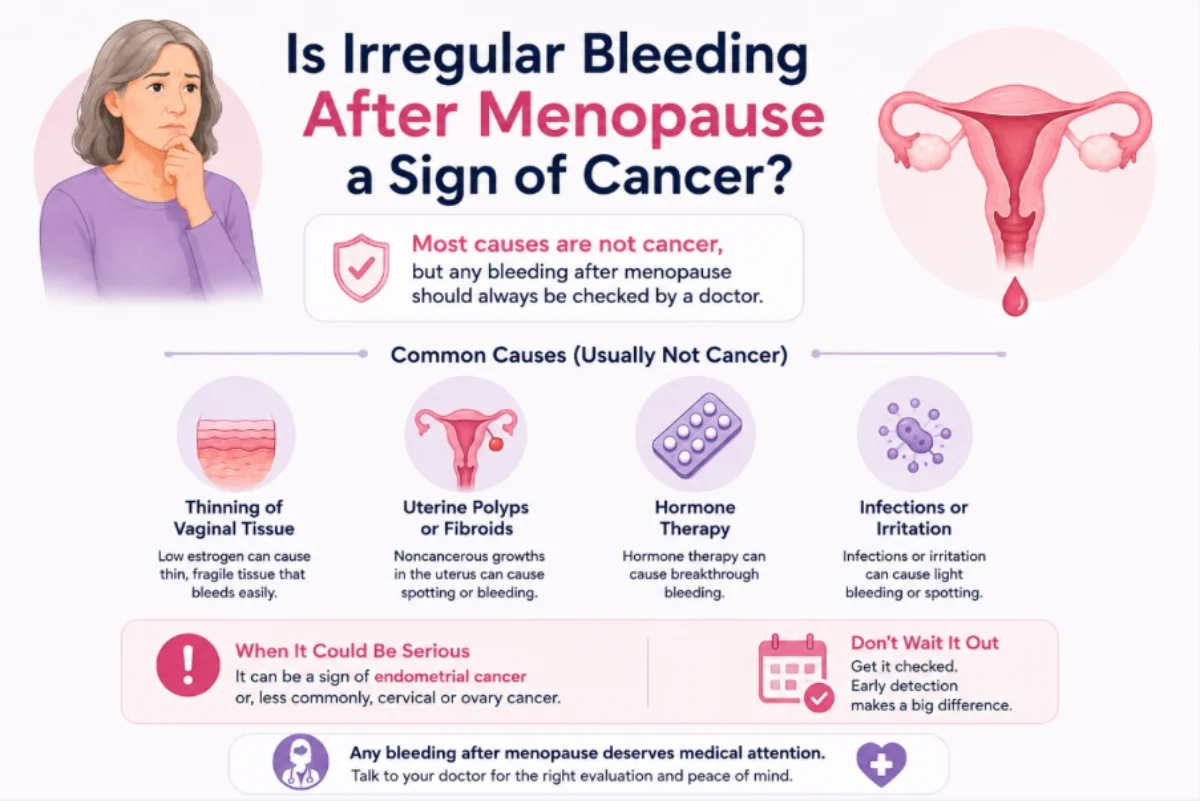
Is Irregular Bleeding After Menopause a Sign of Cancer? Menopause is supposed to mean the end of periods for good. So when bleeding shows up again months or years later, it’s natural to feel confused, and honestly, a little worried.  Here’s the good news right away: most cases of postmenopausal bleeding are not cancer. But it’s also one of those symptoms doctors take seriously every single time, because it can sometimes be an early warning sign. Let’s talk through what’s actually going on, without the panic. Defining Postmenopausal Bleeding: Even Light Spotting Counts Menopause is officially confirmed once you’ve gone 12 full months without a period. Any vaginal bleeding or spotting after that point, even if it’s just a tiny bit of pink or brown discharge, is considered postmenopausal bleeding.  It doesn’t matter if it’s heavy like an old period or just a light spot you noticed once. Either way, it’s your body sending a signal that something has changed, and it deserves a proper look by a doctor. The Common, Less Scary Causes Before your mind jumps to worst-case scenarios, know that there are several everyday reasons this happens, and most of them are very treatable.  Thinning of the vaginal tissue. After menopause, your estrogen levels drop significantly. This can cause the tissue lining the vagina and uterus to become thinner and more fragile, a condition called vaginal atrophy. Thin tissue can bleed easily, even from something as simple as intercourse or a pelvic exam.  Uterine polyps or fibroids. These are small, usually noncancerous growths in the uterus. They’re quite common and can cause spotting or bleeding, especially as hormone levels shift.  Hormone therapy. If you’re on hormone replacement therapy for menopause symptoms, it can sometimes cause breakthrough bleeding, particularly when you’re just starting out or adjusting your dose.  Infections or minor irritation. Sometimes it’s as simple as a vaginal or cervical infection causing irritation and light bleeding.  When It Could Point to Something More Serious While most causes are benign, postmenopausal bleeding is also the most common early symptom of endometrial cancer, which is cancer of the uterine lining. This is actually one of the reasons doctors don’t brush this symptom aside, because catching it early makes a real difference.  Roughly 1 in 10 women who experience postmenopausal bleeding will be found to have endometrial cancer. That number might sound alarming, but flip it around: about 90 percent of the time, the cause turns out to be something else entirely, and often very manageable.  Less commonly, bleeding can also be linked to cervical or ovary cancer. This is exactly why any bleeding after menopause needs a checkup, not a wait-and-see approach. Don’t Wait It Out It’s tempting to think, “It was just a little spotting; it’ll probably go away.” And sometimes it does. But because early detection makes such a big difference in treatment outcomes, especially with endometrial cancer, it’s always worth getting checked rather than waiting to see if it happens again.  Think of it this way: getting it checked either brings you peace of mind quickly or it catches something early when it’s most treatable. There’s no downside to asking. Trust the Signal, Don’t Ignore It Bleeding after menopause is common, and in most cases, it turns out to be something manageable like thinning tissue, polyps, or a hormone adjustment. But because it can occasionally signal something more serious, it’s never something to ignore or feel embarrassed about mentioning to your doctor.  If you notice any bleeding or spotting after menopause, reach out to your healthcare provider. As Dr. Anuj Suketu Shah, a surgical oncologist, often tells patients, the goal of early evaluation isn’t to cause worry; it’s to rule out the serious causes quickly so you can move forward with confidence. If further evaluation is needed, a gynecologic or surgical oncologist can guide you through the right tests and next steps with clarity and care, so you’re never left guessing about your health. 

Gynecologic Oncologic Surgery

Can Breast Cancer Develop Without Any Symptoms? 

Can Breast Cancer Develop Without Any Symptoms? Many women believe breast cancer always announces itself – a noticeable lump, persistent pain, or an obvious change they can feel. But the truth is more unsettling, and more important to understand: breast cancer can grow silently for months, sometimes years, without causing a single symptom you would notice on your own.  The Silent Reality of Early-Stage Breast Cancer One of the most challenging aspects of breast cancer is how quietly it can begin. In the earliest stages, tumors are often too small to feel during a self-exam. There’s no pain, no visible change, and no reason to suspect anything is wrong. Life continues as normal while, beneath the surface, abnormal cells are slowly multiplying.  This is precisely why routine screening matters so much. Many breast cancers are first detected through mammograms – not because a woman felt something, but because imaging caught what hands couldn’t.  Symptoms That Can Appear And When to Take Them Seriously While early breast cancer is often symptom-free, certain changes should never be ignored. These may develop as the cancer progresses:  A lump or thickening in the breast or underarm area (even if it’s painless)  Changes in breast size or shape that aren’t related to your menstrual cycle  Skin changes such as dimpling, redness, or a texture resembling orange peel  Nipple changes including inversion, discharge (especially if bloody), or crusting  Persistent swelling in part of the breast, even without a distinct lump  Unexplained pain in the breast or nipple that doesn’t resolve  It’s worth repeating: the absence of these symptoms does not mean you’re in the clear. Symptom-free does not mean cancer-free. How Is Breast Cancer Diagnosed? Since symptoms can be absent, diagnosis often depends on proactive screening rather than waiting for something to feel wrong.  Screening and Diagnostic Tools  Mammography — the gold standard for routine screening; can detect tumors years before they’re palpable  Ultrasound — often used alongside mammography, especially for younger women with denser breast tissue  MRI — recommended for high-risk women; highly sensitive imaging  Clinical breast exam — performed by a doctor during a routine check-up  Biopsy — the only definitive way to confirm whether a suspicious area is cancerous  Women with average risk are generally advised to begin annual mammograms at age 40. Those with higher risk may need to start earlier or add MRI screening. Your doctor will guide you based on your personal history.  Treatment Options: More Hope Than Ever Before A breast cancer diagnosis is life-changing, but it’s important to know that treatment has advanced significantly. Many women go on to live full, healthy lives after treatment.  Common Treatment Approaches  Surgery — may involve lumpectomy (removing only the tumor) or mastectomy (removing the breast)  Radiation therapy — typically used after surgery to eliminate remaining cancer cells  Chemotherapy — targets rapidly dividing cancer cells throughout the body  Hormone therapy — for hormone receptor-positive cancers, blocks hormones that fuel growth  Targeted therapy — addresses specific proteins or genes driving the cancer  Immunotherapy — helps the immune system recognize and attack cancer cells  The right treatment depends on the type and stage of cancer, overall health, and personal preferences. Treatment decisions are made as a team — between you and your specialist.  Recovery After Breast Cancer Treatment Recovery is deeply personal and varies widely depending on the type of treatment received. Here are a few things that tend to support healing:  Rest and nutrition — your body needs both to recover from surgery or chemotherapy  Physical therapy — especially helpful after mastectomy to restore arm and shoulder movement  Emotional support — counseling, support groups, and open conversations with loved ones matter enormously  Follow-up appointments — don’t skip them; regular monitoring catches recurrence early  Gentle return to activity — many women find that light exercise, like walking, aids both physical and emotional recovery  Healing isn’t linear. Some days will be harder than others, and that’s completely normal.  Practical Steps for Prevention and Early Detection You can’t control every risk factor, but you can take meaningful steps to reduce your risk and catch problems early.  Schedule your annual mammogram — consistency matters more than a single scan  Perform a monthly breast self-exam and know what’s normal for your body  Maintain a healthy weight, especially after menopause  Limit alcohol or avoid it altogether  Exercise regularly — even 150 minutes of moderate activity per week has a measurable protective effect  If you have a family history, ask your doctor about genetic testing for BRCA mutations  Discuss the risks and benefits of hormone therapy with your doctor  These aren’t guarantees. But they shift the odds meaningfully in your favor.  Protecting Yourself Through Awareness Breast cancer can develop without any symptoms, especially during its early stages. This is why regular screenings and routine breast health checks are so important. Early detection allows for more effective treatment, better outcomes, and greater treatment options.  If you have concerns about breast health or need expert guidance regarding Breast Cancer Surgery in Ahmedabad, consulting an experienced surgical oncologist like Dr. Anuj Suketu Shah can help you receive timely evaluation and personalized care. Taking action early is one of the most important steps toward protecting your health.

Gynecologic Oncologic Surgery

Experiencing Unusual Bleeding? Could It Be a Sign of Cervical Cancer?  

Experiencing Unusual Bleeding? Could It Be a Sign of Cervical Cancer? Noticing blood when you don’t expect it can be frightening. Whether it shows up after intimacy, between periods, or after menopause, unusual vaginal bleeding is one of those symptoms that’s easy to dismiss — but probably shouldn’t be.  Here’s the truth: unusual bleeding is one of the most common early signs of cervical cancer. And yet, many women either don’t recognize it as a warning sign or delay seeing a doctor out of fear or uncertainty. If something feels off with your body, it’s always worth paying attention. What Is Cervical Cancer? Cervical cancer develops in the cervix, which is the lower part of the uterus that connects to the vagina. It usually develops slowly over several years and often begins with abnormal changes in cervical cells.  One of the most common causes of cervical cancer is persistent infection with certain types of the Human Papillomavirus (HPV). Early stages may not cause noticeable symptoms, making regular screening extremely important.  Can Unusual Bleeding Be a Sign of Cervical Cancer?  Yes, unusual bleeding can be one of the earliest warning signs of cervical cancer. Although abnormal bleeding does not always indicate cancer, it should be evaluated by a healthcare professional.  Types of Unusual Bleeding That Deserve Attention Not all abnormal bleeding looks the same. Here are the patterns that should prompt a visit to your doctor:  Bleeding between periods — Spotting or light bleeding that occurs outside your regular menstrual cycle.  Heavier or longer periods than usual — A noticeable change in your normal menstrual pattern.  Bleeding after menopause — Any vaginal bleeding after you’ve stopped having periods is never normal and always requires evaluation.  Unusual vaginal discharge — Watery, blood-tinged, or foul-smelling discharge can accompany early cervical changes.  It’s worth saying again: these symptoms don’t always mean cancer. Infections, hormonal changes, or benign polyps can also cause them. But only a proper examination can tell you which one it is. Treatment Options for Cervical Cancer The good news is that cervical cancer is highly treatable, especially when caught early. Treatment depends on the stage, your age, and overall health.  Surgery — For early-stage cancer, a LEEP procedure, cone biopsy, or hysterectomy may be recommended depending on how advanced the disease is.  Radiation therapy — Uses targeted energy to destroy cancer cells, often combined with chemotherapy.  Chemotherapy — Medications that kill or slow the growth of cancer cells, often used alongside radiation for more advanced stages.  Targeted therapy and immunotherapy — Newer treatment options that work with the body’s own immune system or target specific cancer cell proteins.  How to Reduce Your Risk You have more control over cervical cancer risk than you might think:  Get the HPV vaccine — It’s recommended for girls and boys from age 9 and can be given up to age 45 in some cases. Talk to your doctor about whether it’s right for you.  Go for regular Pap smears — Don’t skip screenings, even if you feel perfectly well.  Quit smoking — This benefits your cervical health along with everything else.  Know your body — If something changes, speak up.  Can Cervical Cancer Be Prevented? While not all cases can be prevented, several steps can significantly reduce the risk.  Prevention Tips  Get the HPV vaccine if recommended  Schedule regular Pap smear screenings  Avoid smoking  Maintain a healthy immune system  Seek prompt evaluation for unusual symptoms  Prevention and early detection remain the strongest tools against cervical cancer. When Early Action Makes a Difference Experiencing unusual bleeding can be concerning, but it should never be ignored. While there are many possible causes, it can sometimes be an important warning sign of cervical cancer. Early evaluation, accurate diagnosis, and timely treatment can greatly improve outcomes and provide peace of mind.  If you notice abnormal bleeding, pelvic discomfort, or other concerning symptoms, consult surgical oncologist Dr. Anuj Suketu Shah for a thorough assessment and personalized guidance. Taking action early is one of the most important steps you can take for your long-term health and well-being.

Gynecologic Oncologic Surgery

When Should Abnormal Bleeding Be a Concern for Uterus Cancer?  

When Should Abnormal Bleeding Be a Concern for Uterus Cancer? Many women think unusual bleeding is a hormonal issue. Most of the time, that is true. There are times when certain bleeding patterns need more attention. Knowing the difference can really save your life. Abnormal uterine bleeding is often a sign of uterus cancer, also known as endometrial or uterine cancer. The problem is that it can be mistaken for periods, perimenopause, or fibroids. Women should know when bleeding is a sign of something.  Uterine cancer and abnormal uterine bleeding are issues every woman needs to take uterine cancer and abnormal uterine bleeding seriously and understand uterine cancer and abnormal uterine bleeding. What Is Uterus Cancer? Uterus cancer, which is also known as cancer starts in the lining of the uterus. This lining is called the endometrium. It is one of the most common gynecologic cancers in women, especially after menopause.  The good thing, about uterus cancer is that it is usually found early. This is because women often have vaginal bleeding when they first get uterus cancer. What Is Considered Abnormal Bleeding? Abnormal bleeding refers to any vaginal bleeding that is unusual for your age, menstrual cycle, or stage of life.  Common Examples Include:  Bleeding between periods   Very heavy menstrual bleeding   Bleeding after menopause   Periods lasting longer than usual   Spotting after intercourse   Bleeding after menopause, even if it happens only once   Many women assume occasional irregularity is harmless. However, repeated or unexplained bleeding deserves medical evaluation. Signs of Abnormal Bleeding That Should Not Be Ignored One of the most important warning signs of uterus cancer is postmenopausal bleeding.  Bleeding After Menopause If you have stopped menstruating for 12 months or more and experience any vaginal bleeding, it should be evaluated immediately.  Even light spotting can be significant.  Heavy or Prolonged Periods Women approaching menopause may experience hormonal fluctuations. Still, unusually heavy bleeding or periods lasting longer than 7 days should not be ignored.  Bleeding Between Periods Frequent spotting or bleeding unrelated to your menstrual cycle can sometimes indicate changes in the uterine lining.  Bleeding After Intercourse Although this symptom may have several non-cancerous causes, persistent bleeding after sexual activity requires medical attention. Causes of Abnormal Bleeding Other Than Uterus Cancer It is important to remember that abnormal bleeding does not always mean cancer.  Other Possible Causes Include:  Hormonal imbalance   Polycystic ovary syndrome (PCOS)   Uterine fibroids   Endometriosis   Thyroid disorders   Certain medications   Infection   Pregnancy-related complications   Still, identifying the exact cause requires proper medical examination. How Is Uterus Cancer Diagnosed? If abnormal bleeding continues or raises concern, your doctor may recommend further testing.  Medical Evaluation for Abnormal Bleeding  Pelvic Examination A physical examination helps assess abnormalities in the reproductive organs.  Ultrasound Scan A transvaginal ultrasound checks the thickness of the uterine lining and identifies possible growths or abnormalities.  Endometrial Biopsy This is one of the most important tests. A small tissue sample from the uterine lining is examined for cancer cells.  Hysteroscopy A thin camera is inserted into the uterus to look for abnormal areas directly.  Additional Imaging Tests CT scans or MRI scans may be used if cancer is suspected to determine its stage.  Early diagnosis often leads to simpler treatment and better recovery outcomes.  Can Uterus Cancer Be Prevented? There is no guaranteed way to prevent uterus cancer, but certain lifestyle choices may help lower risk.  Prevention Tips  Maintain a healthy body weight   Exercise regularly   Control diabetes and blood pressure   Eat a nutritious diet rich in fruits and vegetables   Avoid self-medication with hormones   Schedule regular gynecological checkups   Awareness of symptoms remains one of the best tools for early detection. Don’t Ignore Unusual Bleeding Abnormal bleeding may not always be serious, but it should never be ignored, especially after menopause or when it happens repeatedly. Early diagnosis of uterus cancer can lead to better treatment outcomes and faster recovery. If you notice unusual symptoms, consulting an experienced Surgical Oncologist like Dr. Anuj Suketu Shah can help you get timely care and peace of mind. 

Gynecologic Oncologic Surgery

How Gynecological Cancer Affects Fertility and Pregnancy 

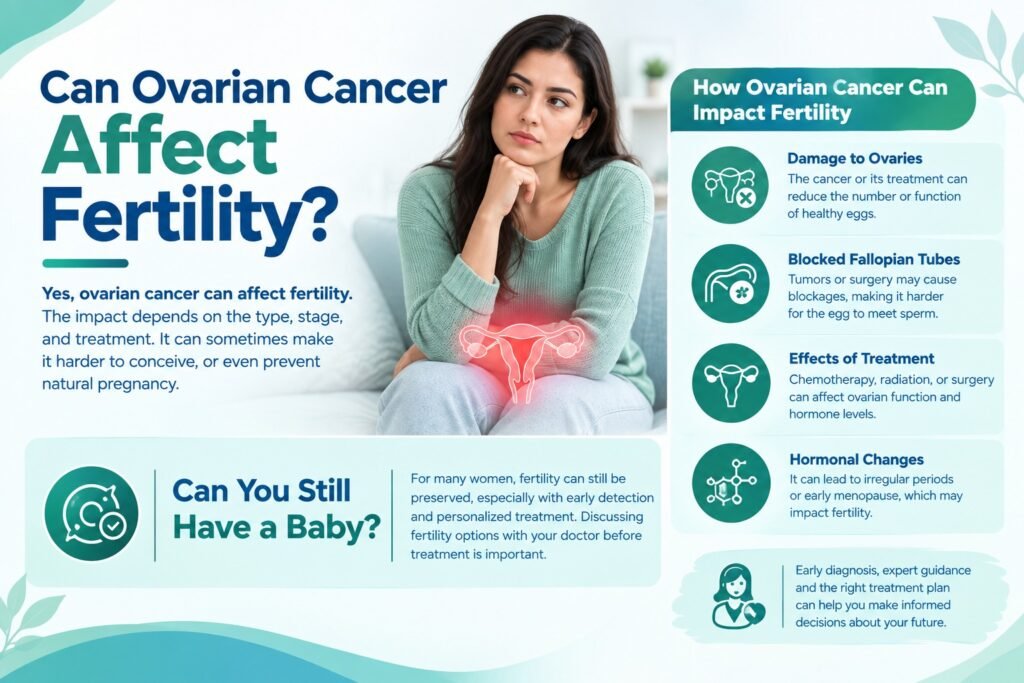
How Gynecological Cancer Affects Fertility and Pregnancy For many women, a diagnosis of gynecological cancer can feel like life has suddenly stopped. One minute you’re thinking about starting a family, building a career, planning your future, and the next you’re trying to process a diagnosis you never saw coming. Aside from treatment and recovery worries, one emotional question often becomes inescapable:   “Will I still be able to have children?”  That uncertainty can seem devastating to women who are either planning a pregnancy now, or hoping to become mothers in the future. The fear of infertility can add to the emotional stress in an already difficult time.  The good news is that cancer treatment today has opened up more possibilities than ever before. Expert guidance and advanced Gynecologic Oncologic Surgery in Ahmedabad can help women explore fertility-preserving options while receiving effective cancer care. Here, we’ll look at how gynecological cancer affects fertility and what pregnancy options may still be available after treatment.  Understanding the Connection Between Cancer and Fertility Gynecological cancers are cancers that affect organs that play a direct role in reproduction, such as the ovaries, uterus, cervix, vagina, vulva and fallopian tubes. Depending on the type of cancer and stage of diagnosis, the impact of cancer on fertility can be temporary or permanent.  The impact usually depends on factors such as:  Type of cancer   Stage of diagnosis   Age of the patient   Overall reproductive health   Type of treatment required   Early diagnosis often gives women more fertility-preserving options, which is why timely consultation is extremely important.  How Treatment Affects Your Body In many cases, fertility challenges happen because of the treatment process rather than the cancer itself.  Surgery – Certain surgeries may require removing reproductive organs like the uterus, ovaries, or cervix. While these procedures can be life-saving, they may affect natural pregnancy.  Chemotherapy – Chemotherapy may impact ovarian function and reduce egg quality. Some women may experience:  Irregular periods   Lower fertility chances   Early menopause   Temporary reproductive changes   Radiation Therapy – Radiation in the pelvic area may sometimes damage reproductive tissues, making pregnancy difficult in the future.  This is why discussing fertility goals before treatment begins is extremely important.  Fertility-Sparing Options: A Modern Approach One of the biggest misconceptions women often have is that cancer treatment means permanent infertility. Luckily, that’s not always true. As Gynecologic Oncologic Surgery has advanced, doctors can preserve fertility when it is medically safe to do so.  In some early-stage cases, surgeons may only remove the affected area, leaving healthy reproductive organs intact. Women may also be advised to explore fertility preservation options such as egg freezing, embryo freezing, or ovarian tissue preservation prior to starting treatment. Such decisions require careful planning and should always be discussed with an experienced Gynec cancer surgeon in Ahmedabad who understands both cancer treatment and fertility concerns.  Pregnancy After Cancer: Is It Safe? One of the most common concerns women have after treatment is whether pregnancy will still be possible.  The answer depends on your recovery, type of treatment, and overall health. Many women successfully conceive after cancer treatment some naturally and others with fertility support.  Doctors may recommend:  Waiting for your body to fully recover   Regular follow-up appointments   Fertility evaluations before trying to conceive   High-risk pregnancy monitoring in certain cases   Every journey is different, which is why expert guidance matters.  Patient Perspective Many women feel isolated after a diagnosis because fertility concerns are often deeply personal. One patient shared that her biggest fear after being diagnosed wasn’t just the treatment it was whether she would ever become a mother. After consulting a specialist, she learned that fertility-preserving treatment was possible in her case.  Today, she is recovering well and feels hopeful about her future. Stories like these remind patients that there is life beyond cancer and sometimes, motherhood too.  Take the First Step Toward Healing and Hope A cancer diagnosis can feel overwhelming but it does not define your future. With early diagnosis, proper treatment, and expert medical guidance, many women can move forward with confidence and hope.  If you’re concerned about fertility and pregnancy after cancer treatment, consult Dr. Anuj Suketu Shah, a trusted Cancer Surgeon in Ahmedabad, to explore your options.  Book your consultation today and take the first step toward healing, recovery, and hope for the future. 

Scroll to Top